6 Jun 2026
Decoding Algorithmic Filters That Match Poker Promotions to Individual Playing Habits Across Regions
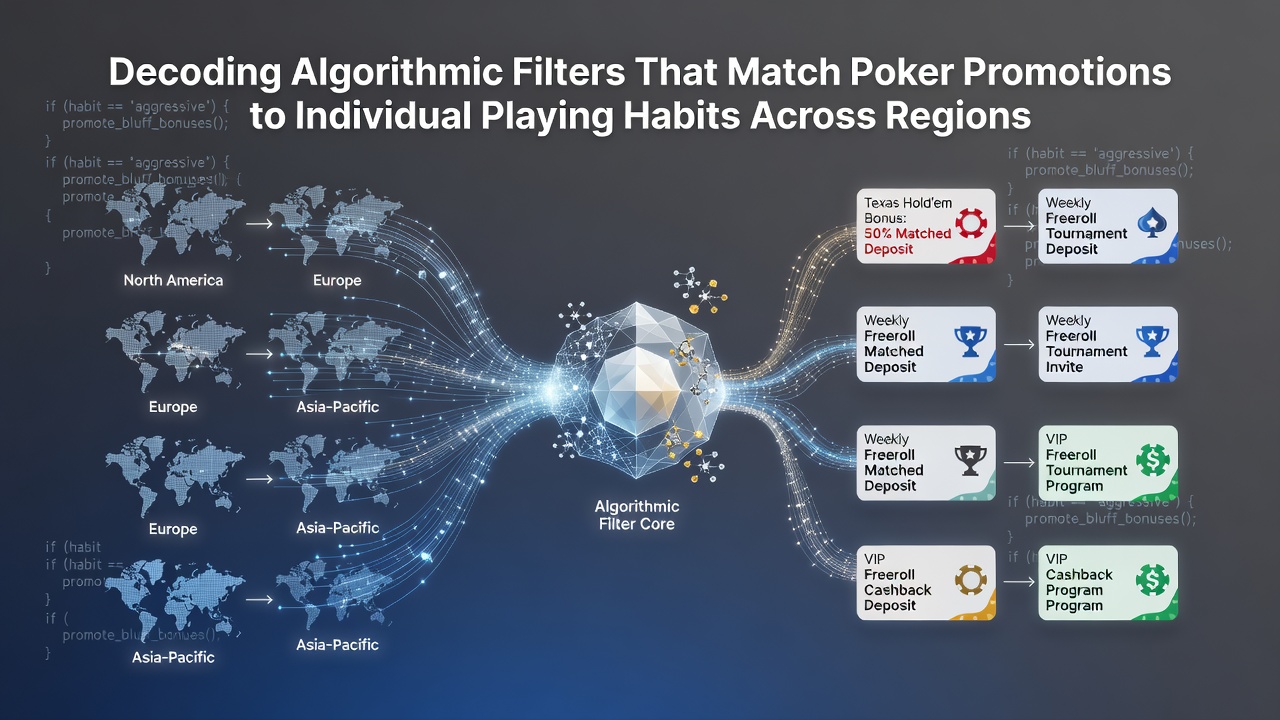
Algorithmic filters in online poker platforms process large datasets to align promotional offers with patterns in individual play, and these systems operate differently depending on regulatory environments and cultural preferences in various parts of the world. Data points such as preferred game variants, average session duration, deposit frequency, and response rates to past bonuses feed into machine learning models that generate targeted incentives, while regional rules shape how much information operators can collect and apply.
Data Inputs and Processing Methods
Platforms track metrics including hand volume per week, preferred stakes levels, and participation in tournaments versus cash games, then apply clustering algorithms to group players with similar behaviors before matching them to suitable promotions. These models often incorporate time-based variables such as peak playing hours and response latency to bonus notifications, creating dynamic offers that adjust in real time as habits evolve. Observers note that supervised learning techniques improve accuracy when historical data from millions of sessions trains the systems to predict which reward structures will drive continued engagement.
Regional Differences in Player Patterns and Regulations
North American markets tend to show higher engagement with high-stakes no-limit hold'em promotions tied to volume-based rewards, whereas European segments frequently respond better to multi-table tournament entry incentives that account for schedule flexibility. In the Asia-Pacific region, shorter session lengths and preference for mobile-accessible sit-and-go formats influence the design of deposit-match offers and rakeback structures. Regulatory frameworks further differentiate approaches, since jurisdictions in the United States require explicit consent mechanisms that limit certain data uses, while operators licensed in Malta follow directives that permit broader behavioral analysis when safeguards remain in place.
Research from the Malta Gaming Authority indicates that cross-border platforms must reconcile these varying requirements, which leads to segmented filtering systems that apply stricter privacy controls in some markets and more granular personalization in others. June 2026 updates to data portability standards in several European jurisdictions have prompted operators to refine their algorithms so that player profiles transfer across licensed entities without exposing sensitive behavioral details.
Implementation Across Global Networks
Operators integrate these filters into loyalty engines that recalculate reward tiers weekly based on recent activity, and they test variations through A/B frameworks that measure uplift in deposit rates and retention periods. One documented case involved a network adjusting its freeroll qualification criteria for players in Canada after internal analysis revealed stronger participation when promotions aligned with local sports schedules rather than generic volume targets. Such adjustments occur alongside compliance checks that verify promotional content meets advertising standards set by bodies like the Nevada Gaming Control Board.

Technical teams deploy edge computing resources in key data centers to reduce latency when serving personalized offers during live sessions, and they combine this infrastructure with anonymized benchmarking data from industry reports. Figures released by the Australian Institute of Criminology show measurable differences in promotion redemption rates between urban and regional player cohorts, prompting networks to incorporate geographic signals into their filtering logic.
Challenges in Accuracy and Compliance
Model drift occurs when sudden shifts in player behavior, such as those triggered by major tournament series, outpace retraining cycles and reduce matching precision. Platforms address this through continuous validation against holdout datasets, yet regional data protection laws sometimes restrict the retention periods needed for robust retraining. In June 2026 several networks introduced federated learning approaches that allow models to improve without centralizing raw player records, satisfying stricter consent rules while maintaining performance across borders.
Cross-regional comparisons reveal that Asian markets place greater emphasis on instant reward notifications, while Latin American segments show higher conversion when promotions bundle with local payment method bonuses. These patterns emerge from aggregated telemetry rather than individual tracking in jurisdictions with tighter rules, forcing operators to rely on cohort-level insights instead of fine-grained personalization.
Conclusion
Algorithmic filters that connect poker promotions to playing habits continue to evolve as platforms balance personalization goals against regulatory constraints that differ sharply by region. Continued refinement of these systems depends on access to reliable behavioral datasets and technical methods that respect jurisdictional boundaries, with developments in mid-2026 highlighting the growing role of privacy-preserving techniques in maintaining effective matching at scale.