2 Jul 2026
Exploring Connections Between Time Zone Variations and Participation Rates in Global Virtual Poker Events
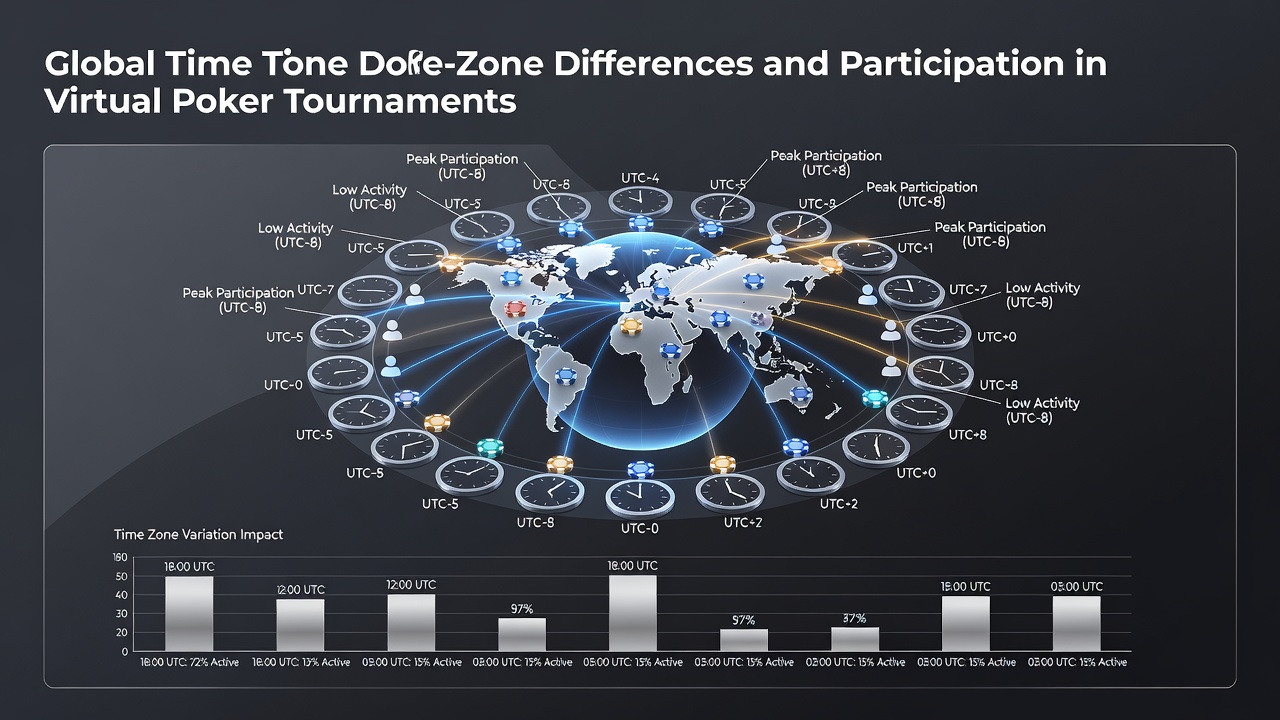
Global virtual poker events draw players from dozens of time zones, and participation rates shift noticeably when tournament schedules align with evening hours in major regions such as North America, Europe, and East Asia. Observers note that platforms hosting daily tournaments often record higher entry numbers when start times coincide with local prime-time windows rather than early morning or late night slots for distant participants.
Time Zone Overlaps Shape Entry Patterns
Data from international operators shows that events scheduled between 18:00 and 22:00 UTC typically attract the broadest mix of players because this window overlaps with after-work hours across Western Europe, the eastern United States, and parts of South America. In contrast, tournaments beginning at 02:00 UTC see reduced sign-ups from Asian markets where most participants are asleep, while numbers from Australia remain steady because evening has already arrived there. Researchers tracking multi-year logs have documented that a four-hour shift in start time can alter total entries by double-digit percentages depending on the geographic distribution of registered accounts.
Regional Data Reveals Distinct Peaks
European players contribute the largest share of entries when events start between 19:00 and 21:00 local time, according to aggregated figures released by operators licensed in Malta. North American participation climbs sharply once clocks in the Eastern Time Zone reach 20:00, creating a secondary surge that sustains overall numbers until midnight UTC. Meanwhile, Southeast Asian and Australian markets drive volume during their own evening blocks, which fall between 08:00 and 14:00 UTC, and operators have adjusted select Sunday majors to capture both cohorts simultaneously. Figures released by the Australian Communications and Media Authority illustrate how these staggered peaks maintain steady platform traffic even when one hemisphere experiences a lull.
Platform Adjustments in 2026
Leading networks continue to refine schedules ahead of the 2026 summer calendar, including series that begin in July. Several operators have introduced staggered flight structures so that a single championship offers multiple starting times spaced six hours apart, allowing participants in Tokyo, London, and Los Angeles to select a convenient session. Preliminary registration data released ahead of July 2026 events indicates that dual-flight formats have lifted total unique entrants by balancing load across time zones rather than concentrating entries into one narrow window. Industry reports from the European Gaming and Betting Association note similar experiments across cash-game lobbies, where ring-game traffic remains more stable when tables open continuously rather than closing during low-overlap periods.
Software and Notification Tools Influence Behavior
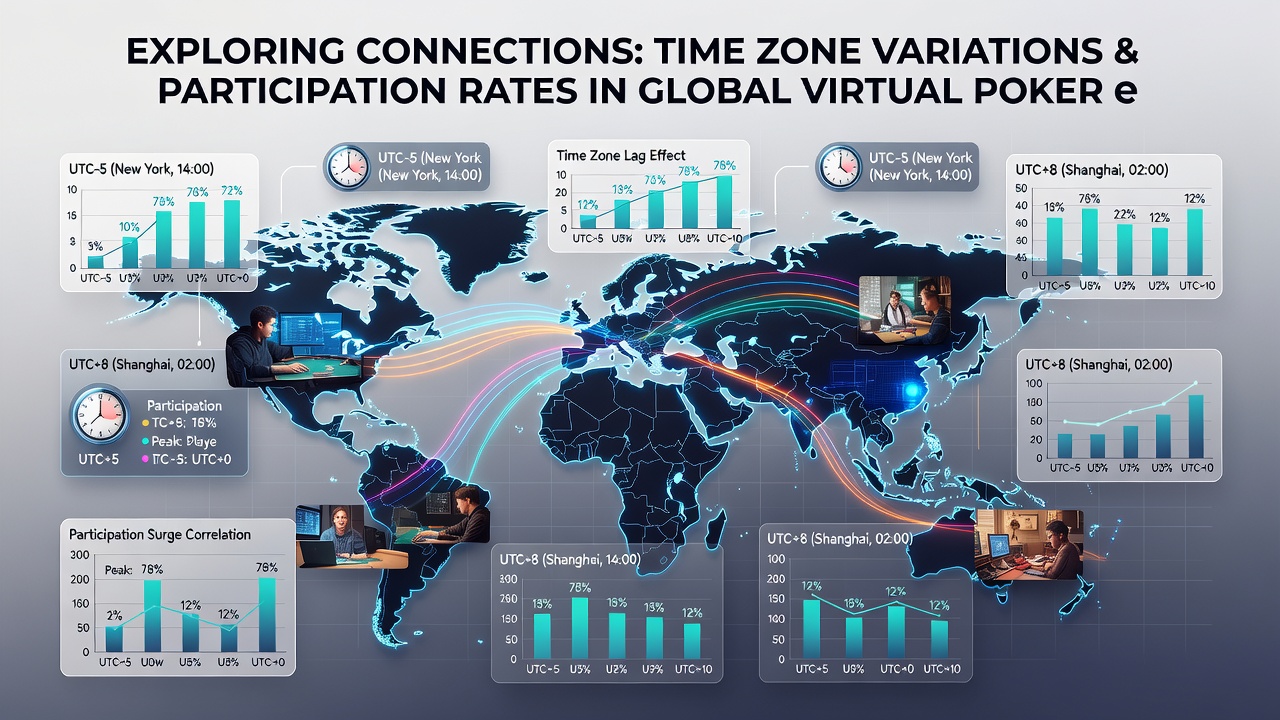
Modern poker clients now embed time-zone converters and personalized alerts that translate event times into the player's local clock, reducing missed registrations caused by miscalculations. Studies examining user interaction logs find that players who receive localized reminders enter events at higher rates than those relying solely on UTC listings. Mobile applications further amplify this effect by pushing notifications during the recipient's typical active hours, which vary widely across continents. Observers tracking retention metrics report that these features narrow the participation gap between core and peripheral time zones, although absolute numbers still favor regions whose evening hours align with popular tournament blocks.
Longitudinal Trends Across Networks
Long-term datasets compiled by independent analytics firms reveal consistent seasonal patterns: participation dips during major holiday periods regardless of time zone, yet recovers fastest in regions where local evening coincides with the event. When Daylight Saving Time transitions occur in March and October, operators observe brief fluctuations as players adjust to new local start times, with European markets showing quicker adaptation than North American ones because more countries shift clocks on the same date. These micro-shifts compound over months and produce measurable differences in monthly active user counts for time-sensitive tournament series.
Conclusion
Time zone alignment continues to exert measurable influence on entry volumes for global virtual poker events, prompting operators to adopt multi-flight schedules and localized notification systems that accommodate dispersed player bases. Available datasets through mid-2026 demonstrate that thoughtful scheduling and software tools can mitigate some disparities, yet the underlying geographic distribution of participants remains the dominant factor shaping overall participation curves.