25 Jul 2026
How Age Groups and Locations Shape Feature Priorities in Global Poker Platforms
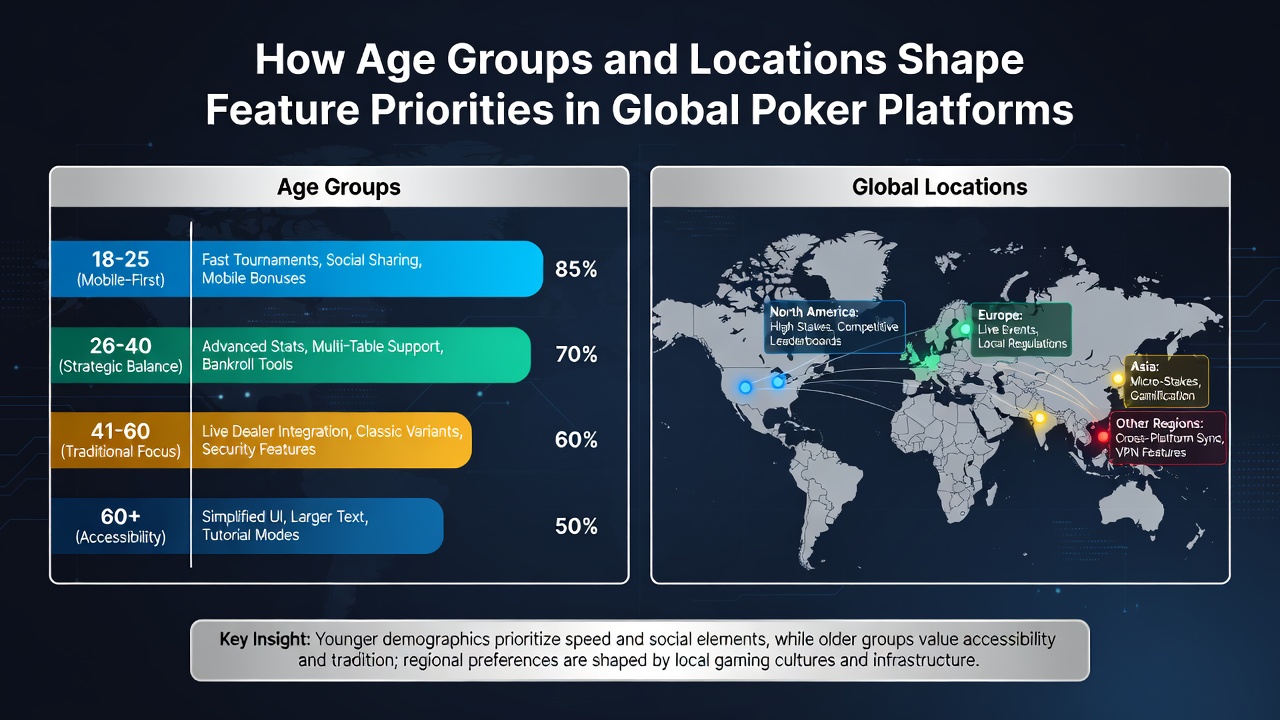
Data from multiple international studies reveals clear patterns in how age groups and geographic locations determine which features players prioritize on global poker platforms, with younger users often favoring mobile accessibility while older segments emphasize security protocols and established payment systems.
Demographic Patterns in Feature Selection
Research indicates that players aged 18 to 34 consistently rank mobile app functionality and real-time notifications as top priorities, whereas those over 50 place greater weight on desktop stability and detailed transaction histories, according to aggregated reports from industry analysts tracking user behavior through 2025 into July 2026.
Observers note that these differences emerge because younger participants tend to access platforms during short, frequent sessions on smartphones, while older groups often prefer longer sessions on larger screens with comprehensive account management tools.
Regional Variations Across Continents
Location plays an equally decisive role, with platforms operating in Asia-Pacific markets reporting higher demand for localized payment gateways and language support compared to North American users who focus more on regulatory compliance indicators and multi-table tournament filters.
European players, meanwhile, show stronger preferences for responsible gaming features such as session time limits and deposit caps, as evidenced by data compiled through regulatory filings in several jurisdictions.
One study from iGaming Ontario highlighted that Canadian users in the 35-49 age bracket prioritize loyalty reward structures tied to regional promotions, while similar age groups in Australia demonstrate greater interest in integration with local banking apps.
Age-Based Priorities in Mobile Versus Desktop Experiences
Platforms have adjusted interfaces based on these observed trends, with data showing that 18-34 year olds complete over 70 percent of their sessions via mobile devices in many markets, leading developers to emphasize touch-optimized controls and push notifications for tournament alerts.
In contrast, users aged 50 and above interact more frequently with desktop versions, where features like advanced hand history analysis and customizable table layouts receive higher engagement rates, according to internal metrics shared across major networks.
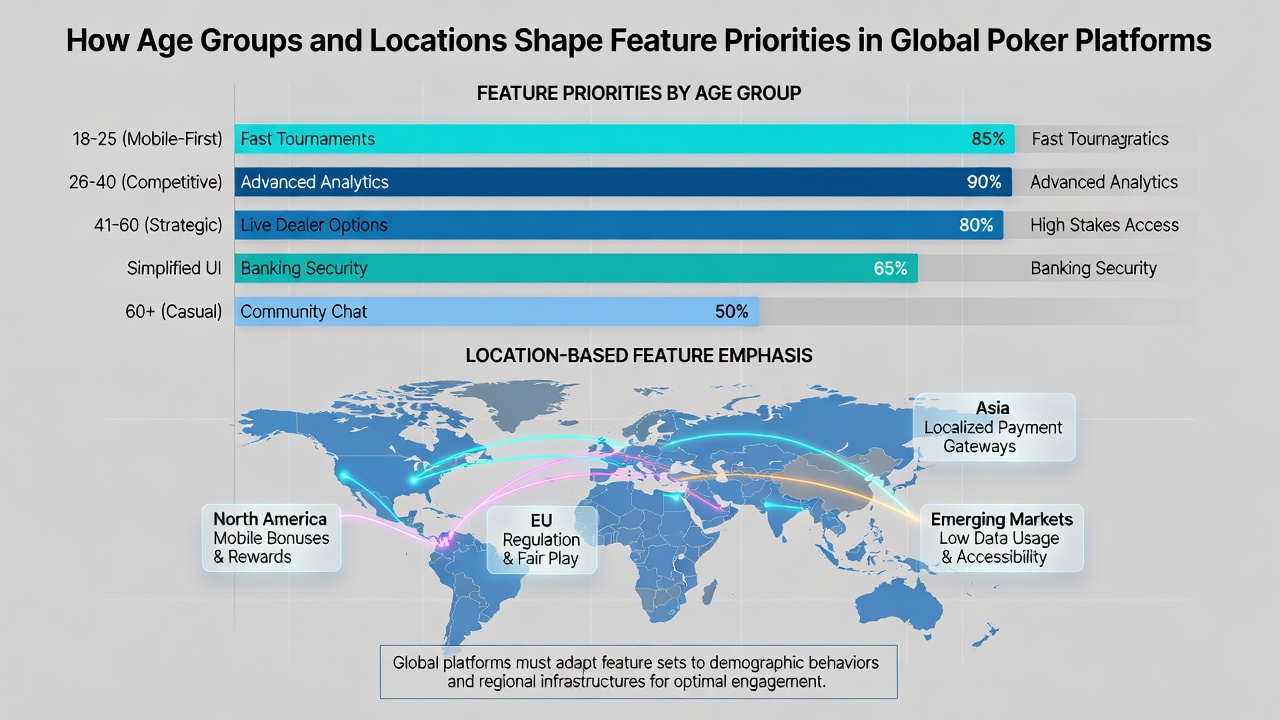
But here's the thing, these patterns hold steady even as overall mobile adoption rises globally, because older demographics continue to value the precision of mouse-driven navigation and expanded screen real estate for tracking multiple tables simultaneously.
Geographic Influences on Payment and Security Features
Payment preferences diverge sharply by region, with platforms in Southeast Asia noting frequent requests for cryptocurrency options and e-wallet integrations that align with local infrastructure, while North American markets see sustained emphasis on traditional credit card processing and bank transfers with enhanced verification steps.
A report linked to findings from the Australian Communications and Media Authority underscores how Australian users across age groups prioritize seamless integration with domestic financial systems, whereas European counterparts often highlight encryption standards and data protection certifications as deciding factors in platform choice.
Observers tracking these trends point out that location-specific regulations further shape priorities, such as stricter identity verification in certain EU countries that older players accept more readily than younger ones who prefer streamlined onboarding processes.
Intersection of Age and Location in Promotion Customization
When age and location intersect, platforms observe compounded effects on feature demands, for instance younger players in emerging markets request social sharing tools and community chat functions at higher rates than their counterparts in established markets, while older players in the same regions focus on detailed payout reports and tax documentation aids.
Figures from academic reviews of user data, including work associated with the University of Nevada Las Vegas gaming research programs, confirm that these combined factors influence everything from bonus structures to software update rollouts scheduled around mid-2026.
What's interesting is how platforms use segmentation analytics to deliver tailored experiences without altering core gameplay, allowing regional teams to test mobile enhancements for one demographic while reinforcing security dashboards for another.
Platform Adaptations Through 2026
By July 2026, several networks had implemented region-specific feature toggles based on demographic feedback loops, enabling users to select priority sets that align with their age group and location data collected during registration.
Industry reports indicate these adjustments improved retention metrics across tested cohorts, particularly when mobile notification systems were refined for younger Asian users and desktop analytics tools were expanded for older North American and European segments.
Those who've examined the data note that such targeted developments reflect broader patterns rather than isolated experiments, with regulatory bodies in multiple countries requiring transparency around how player preferences inform these changes.
Conclusion
Overall patterns demonstrate that age groups and locations continue to drive distinct feature priorities on global poker platforms, with mobile-centric demands from younger users in dynamic regions contrasting against security-focused requests from older participants in more regulated markets, supported by ongoing data collection and platform refinements through 2026.