16 Jul 2026
How Regional Time Zone Alignments Influence Software Update Rollouts and Bonus Activation Rates in Worldwide Digital Card Platforms
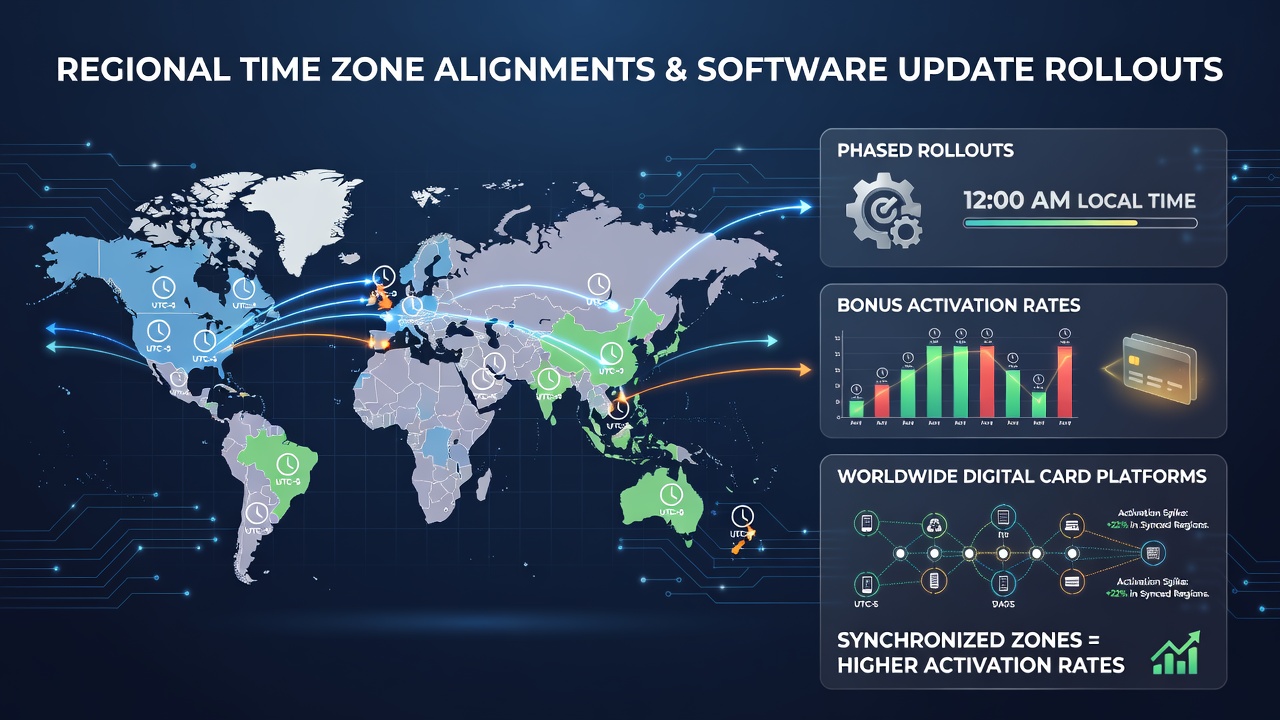
Digital card platforms operate across multiple continents where time zone differences shape when software updates deploy and when bonus features activate for users. Platforms maintain central servers that follow specific regional clocks, which means an update scheduled for midnight in one location lands during peak hours elsewhere. Observers note that these alignments determine the pace of feature releases and the timing of promotional credits distributed to players in Asia, Europe, and the Americas.
Time Zone Coordination in Update Scheduling
Software teams at major platforms select rollout windows based on the lowest activity periods across their primary user bases, and data from deployment logs show that updates often begin in Pacific Time to reach Asia-Pacific users first during their early morning hours. This sequence allows developers to monitor initial performance before the changes propagate to European servers several hours later. When a platform adjusts its update calendar to align with local daylight saving changes, activation rates for new features shift accordingly because users in regions that observe different transitions encounter the changes at varying local times.
Research from the Australian Communications and Media Authority highlights how platforms serving Oceania markets time their patches to coincide with off-peak periods in Sydney and Auckland, which reduces the chance of server strain during high-traffic evening hours. In July 2026, several platforms synchronized a major client update across multiple time zones to address security patches, and internal metrics indicated faster completion rates when the rollout followed a staggered pattern rather than a simultaneous global push.
Effects on Bonus Activation Patterns
Bonus systems tied to daily resets or weekly promotions rely on the platform's chosen server time, which creates variations in when users receive credits depending on their location. A player in Tokyo may see a daily login bonus activate at 9 a.m. local time while a counterpart in New York receives the same credit at 8 p.m. the previous calendar day. These differences influence participation rates because users who log in after their regional reset miss the window until the next cycle begins.
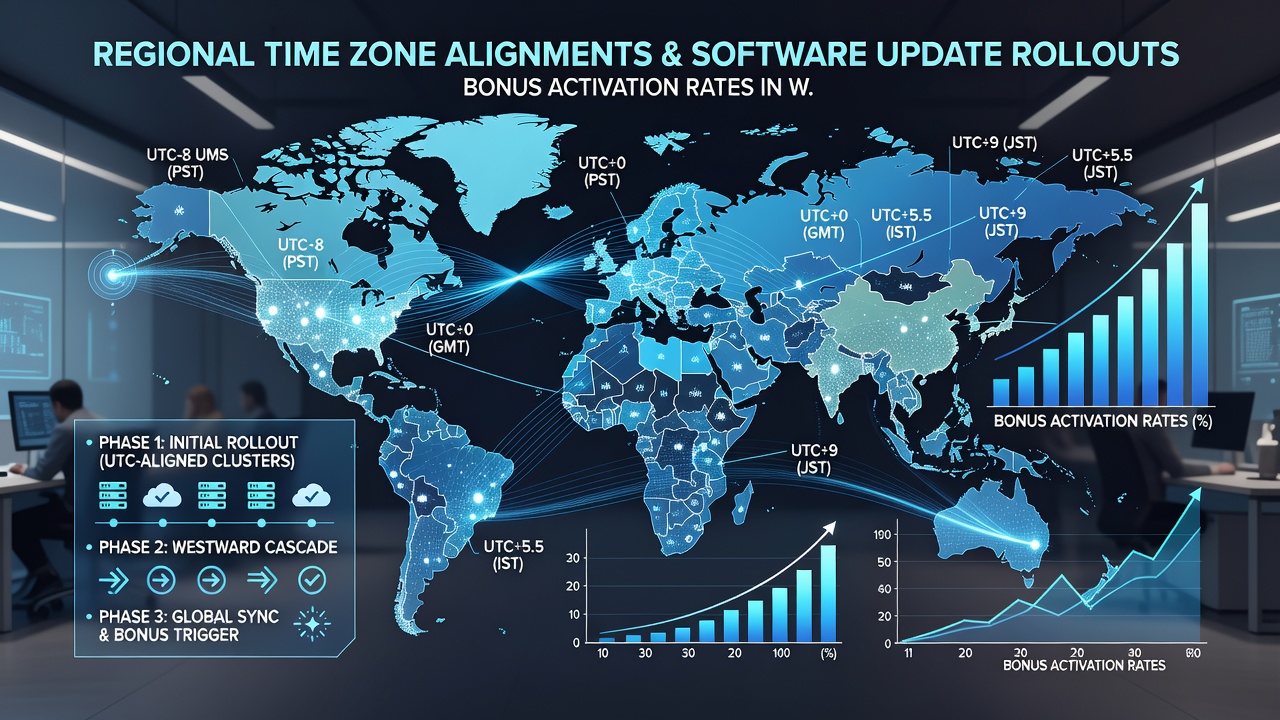
Analysts tracking user behavior across platforms report that bonus claim volumes peak within the first two hours after a regional reset occurs, and platforms that adjust reset times to match dominant user time zones record steadier activation curves. When updates introduce new bonus mechanics, the rollout sequence determines whether early adopters in one time zone gain access before others, which can affect overall engagement metrics during the transition period. Figures from industry reports show that staggered bonus launches reduce load on reward servers by distributing claim traffic over several hours instead of concentrating it at a single moment.
Regional Regulatory and Infrastructure Factors
Regulatory frameworks in different jurisdictions add another layer because some authorities require platforms to log the exact local time of software changes and promotional distributions. Platforms operating under Canadian oversight, for instance, maintain detailed records that link update timestamps to user activity spikes, while operators serving European markets align their documentation wth data protection standards that reference coordinated universal time. These requirements encourage companies to adopt unified logging systems that convert all events into a standard reference while preserving local display times for users.
Network infrastructure quality also varies by region, and slower connections in certain time zones can delay the download of update packages even when servers release them simultaneously. Studies conducted by university research groups in North America indicate that latency differences compound when updates coincide with peak business hours in emerging markets, leading some platforms to extend rollout windows by several hours to accommodate these conditions. The result appears in activation data that shows lower bonus engagement from users whose devices finish updating after the promotion window has already opened in their local time.
Platform Strategies for Managing Time-Based Variables
Many platforms now employ automated systems that detect a user's time zone upon login and adjust displayed bonus timers accordingly, which helps maintain consistent user experience despite the underlying server clock. These systems also flag potential conflicts when a scheduled update would overlap with a major promotional event in a high-volume region, prompting teams to shift the deployment by a few hours. Data collected after such adjustments demonstrate measurable changes in both update success rates and subsequent bonus activation numbers.
Cooperation between development teams and regional operations staff allows for more precise timing, and operators that maintain dedicated time zone specialists report fewer instances of delayed feature availability. In practice, this coordination involves reviewing historical traffic patterns from each market before finalizing the rollout calendar, then monitoring live metrics to confirm that activation rates meet expected thresholds across all zones.
Conclusion
Time zone alignments continue to guide decisions about when digital card platforms release software updates and when bonus features become available to users worldwide. The patterns observed in deployment logs and activation statistics reflect the practical need to balance technical requirements with regional user behaviors, while regulatory documentation and infrastructure considerations add further constraints that shape final schedules. As platforms refine their systems, the relationship between these temporal factors and operational outcomes remains a central element in maintaining consistent service across global networks.