16 May 2026
Regional Payment Gateways and Their Role in Facilitating Secure Transactions on Global Poker Networks
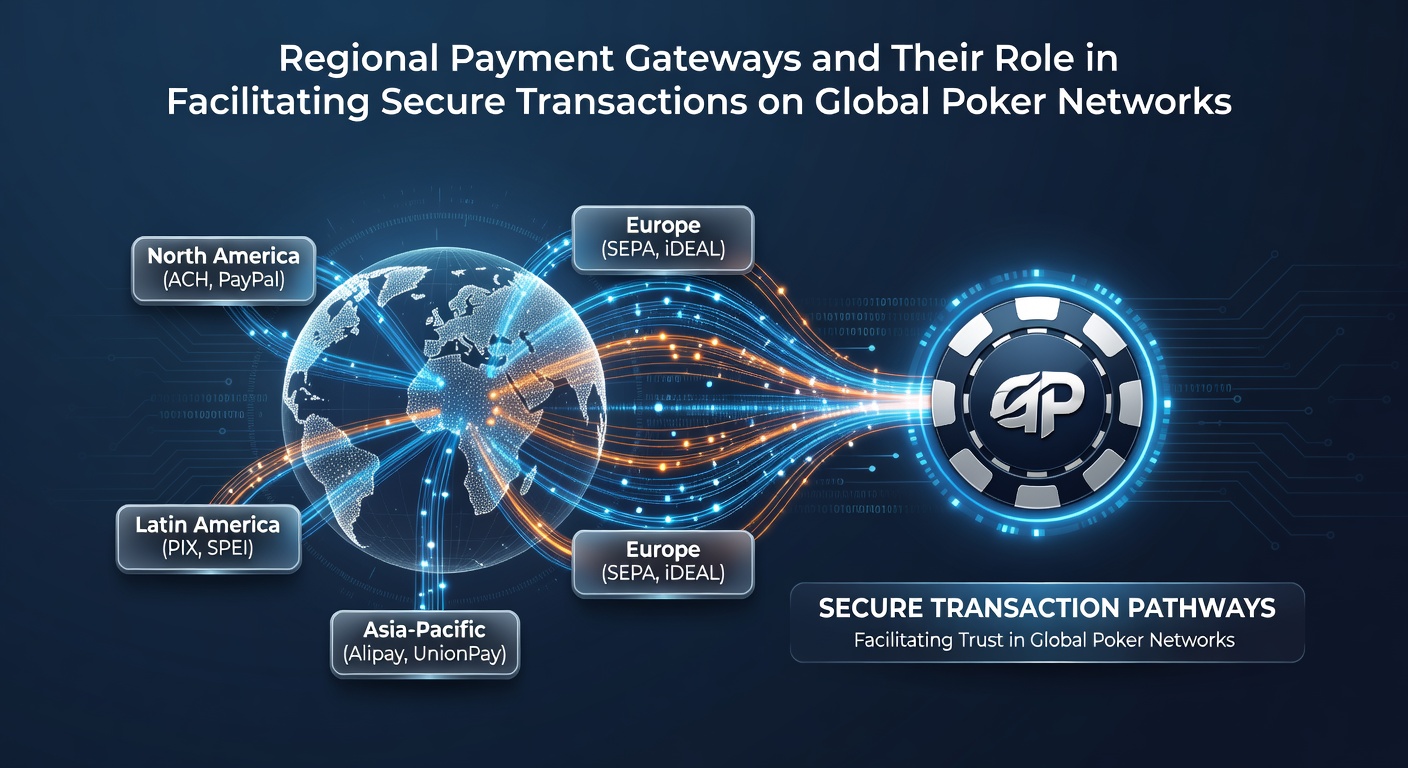 Regional payment gateways serve as specialized financial bridges that connect local banking systems to international poker platforms, allowing players to deposit and withdraw funds while complying with varying national regulations. These gateways process transactions through region-specific methods such as local bank transfers, e-wallets tailored to domestic preferences, and regulated card networks that adapt to currency controls and data-protection rules. In practice, operators integrate these systems to minimize cross-border friction, with many networks updating their infrastructure ahead of anticipated policy shifts scheduled for May 2026 in several jurisdictions.
How Regional Gateways Operate Within Poker Ecosystems
Payment gateways function by routing player requests through licensed local processors that verify identity documents and screen for money-laundering indicators before funds reach the poker network's central ledger. This layered approach relies on real-time API connections between regional banks and gaming servers, ensuring that each transaction carries metadata required by local authorities. Observers note that gateways in Asia often incorporate QR-code systems linked to domestic mobile payment apps, whereas Latin American processors emphasize instant bank transfers via integrated national clearing houses. The result is a fragmented yet coordinated infrastructure that supports millions of micro-transactions daily across time zones.
Security Protocols Embedded in Regional Systems
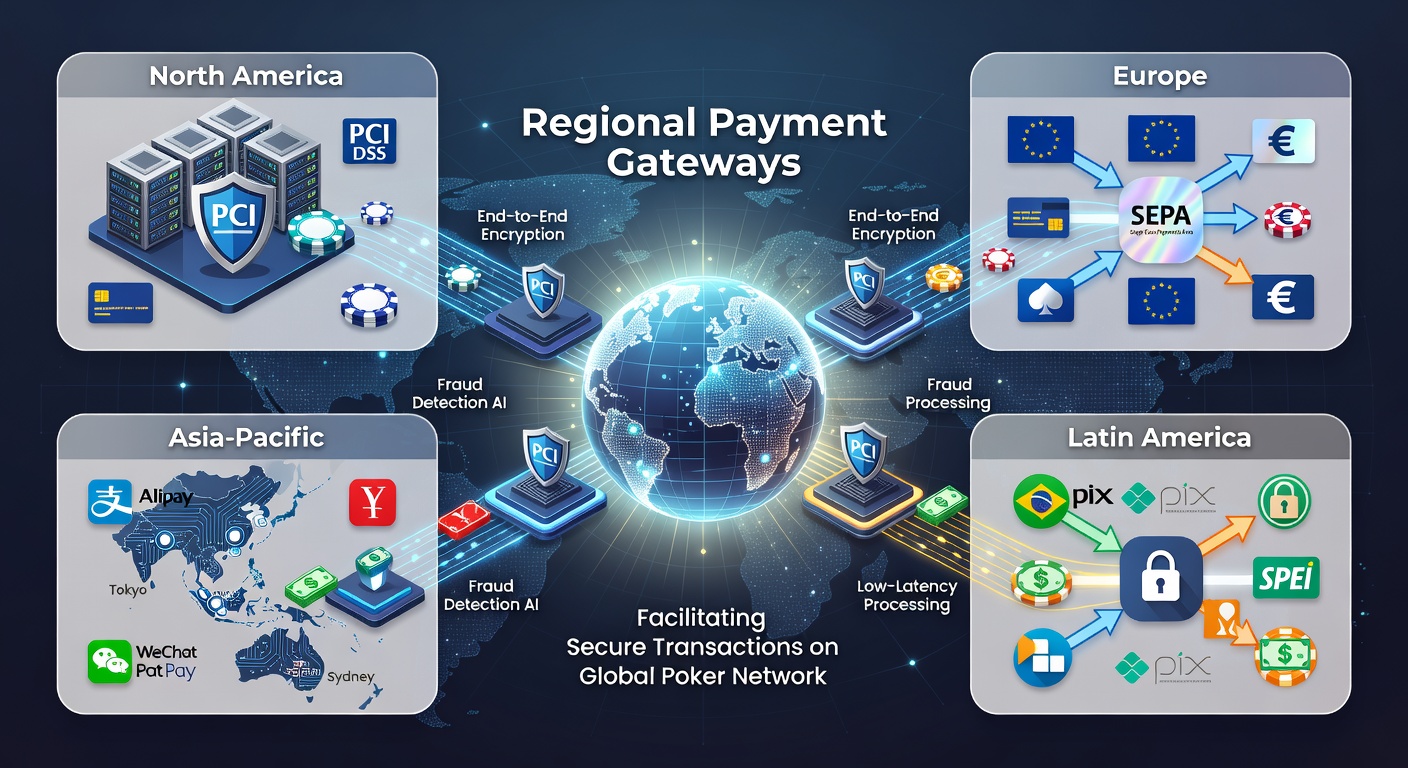
Security measures begin with end-to-end encryption standards mandated by regional financial regulators, followed by tokenization that replaces sensitive card details with unique identifiers stored only on compliant servers. Multi-factor authentication combines device biometrics with one-time codes delivered through local telecom channels, reducing exposure to credential-stuffing attacks. Data shows that networks employing these gateways experience fewer chargeback incidents because disputes are handled first at the local processor level before escalation to the poker operator. Researchers at payment-security institutes have documented how regional gateways also enforce velocity checks that flag unusual withdrawal patterns within specific currency corridors.
Regional Variations and Their Technical Adaptations
- European gateways frequently utilize SEPA Instant Credit Transfers to achieve same-day settlement while meeting stringent data-residency requirements under evolving digital-finance frameworks.
- North American processors integrate with state-licensed money-transmitter networks that reconcile poker winnings against federal reporting thresholds automatically.
- Asia-Pacific systems leverage domestic card schemes and super-apps that bundle gaming deposits with everyday utility payments for streamlined user experiences.
- African and Middle Eastern gateways often partner with mobile-money providers to bypass limited traditional banking penetration in rural areas.
These adaptations allow poker networks to maintain liquidity pools denominated in multiple currencies without exposing operators to excessive foreign-exchange risk. Figures from industry reports reveal that platforms using diversified regional gateways achieve settlement times averaging under four hours for 92 percent of approved withdrawals, compared with multi-day delays when relying solely on global card schemes.
Regulatory Compliance Driving Gateway Selection
Operators select gateways based on licenses issued by bodies such as the Monetary Authority of Singapore and the Reserve Bank of Australia, which impose ongoing audits and capital-reserve obligations. Compliance teams at poker networks maintain separate dashboards for each jurisdiction, tracking transaction logs that must be preserved for periods ranging from five to seven years depending on local statutes. In May 2026, several Caribbean and European territories are expected to introduce updated digital-asset rules that will require gateways to incorporate blockchain analytics tools for enhanced traceability of large poker payouts.
Take one network that expanded into Southeast Asia in 2024: after integrating three new regional processors, the operator reported a 37 percent increase in active player deposits within six months, largely attributed to reduced failed-transaction rates. Similar patterns appear in case studies compiled by university research groups examining cross-border gaming finance, where localized gateways consistently outperform generic international solutions on both speed and regulatory acceptance.
Future Developments Expected by Mid-2026
Technical roadmaps shared by gateway providers indicate wider adoption of open-banking protocols that let poker platforms pull verified bank data directly from regional institutions with player consent. This shift reduces manual document uploads while preserving audit trails demanded by financial-intelligence units worldwide. Meanwhile, emerging markets continue to pilot central-bank digital currencies for gaming settlements, potentially allowing instant, low-cost transfers that bypass traditional card networks entirely.
Conclusion
Regional payment gateways remain essential infrastructure for global poker networks because they reconcile diverse local requirements with the need for uninterrupted, secure fund movement. By embedding jurisdiction-specific compliance, encryption, and settlement logic, these systems enable operators to scale across continents while satisfying regulators and protecting player assets. As policy updates approach in May 2026, networks that maintain flexible gateway partnerships will continue to process transactions efficiently within an increasingly fragmented regulatory landscape.